




OHIO — Researchers at Cedarville University are working toward solutions to monitor and prevent water pollution, as water quality continues to be a pressing environmental challenge in the U.S., costing more than $35 billion annually in mitigation and treatment efforts.
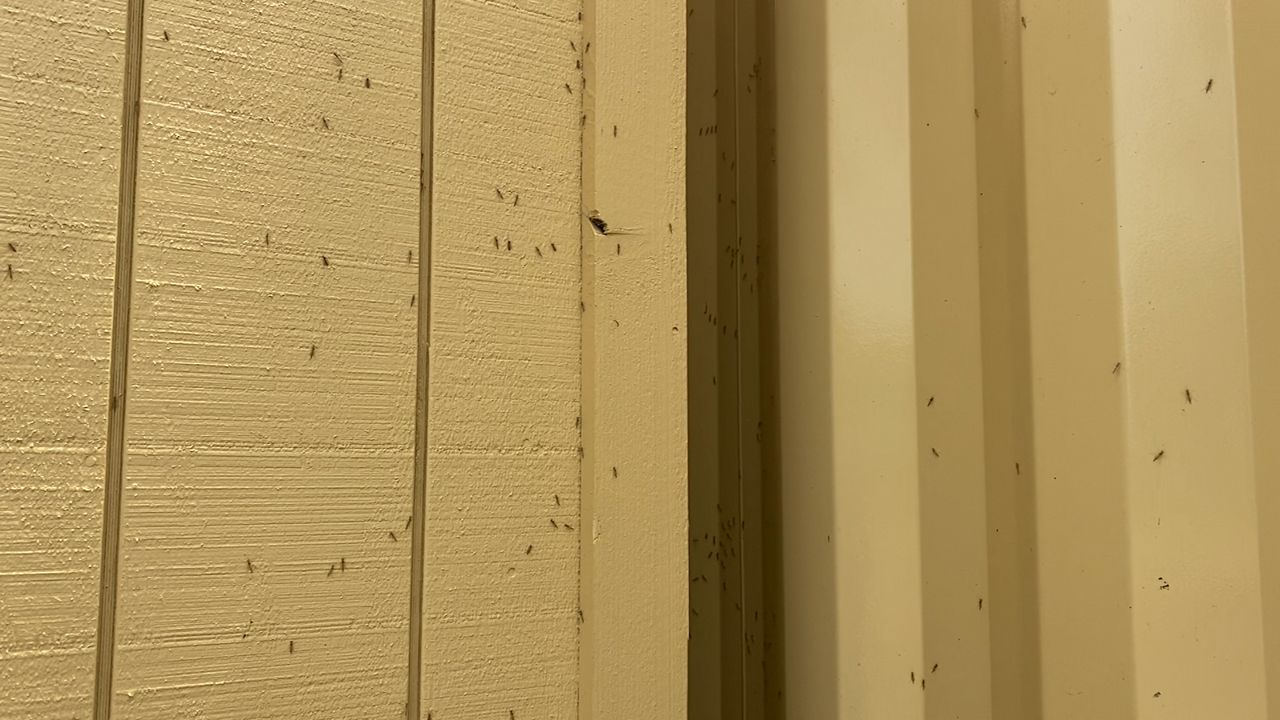
The researchers are looking to an unexpected yet highly effective indicator: midges.
Midges are small aquatic insects that spend most of their life cycle as larvae in freshwater streams before they emerge as non-biting adult flies. Researchers say since the larvae derive nutrients directly from their surrounding water, they can function as environmental condition indicators. They are looking to identify midges at the species level across Ohio, map their geographic locations, and determine their tolerance to differing stream conditions, including pollution levels.
“We’ve known for a long time that midges as a family are everywhere, but that as a species, they are not,” said Mike Mendel, professor of biology and principal investigator of the project. “Different species show up in different kinds of streams, and that’s where the real ecological story is.”
Researchers hope that by analyzing which species are present, or absent, in specific waterways they can then use the midges as biological tools to detect water quality problems, identify specific pollutants and highlight rare species and habitats that may need protection.
“The beauty of midges is that different species are sensitive to different pollutants,” said Mendel. “That means a diverse group of midge species can give us insight into a wide range of water quality problems. In many cases, they may provide earlier and more precise warnings than traditional testing methods.”
Differing pollutants, such as low oxygen, excess sediment and metals such as copper and mercury, affect the species in different ways, and since each species responds differently to the stressors, their presence can serve as a tool to assess stream health.
“Every stream we visit tells a story,” said Abby Paulding, a junior biology major and student researcher on the project. “We note how wide it is, how fast it’s moving, how shaded it is and what the stream bed is like. Then, we look at which midges can live in those exact conditions.”
Researchers say using biological indicators can be cheaper than chemical testing and a more direct way to understand the changes.
Samples were collected from streams across Ohio in the spring, and now researchers are building predictive models to show where the specific species should occur.
“This leads us to the next question,” said Mendel, “why aren’t those species where we expect them to be? At that point, you can start tying absences to specific pollutants or environmental changes.”
Cedarville University said that as the project moves toward its analysis phase, it continues to provide a hands-on education to students in the sciences.
“It’s one thing to read a scientific paper and think, ‘Oh, that’s what they did.’ It’s another thing to be the one hiking to the stream and collecting samples,” said Paulding. “This research has helped me realize that I love both sides of the work — the muddy, hands-on field days and the careful hours at the microscope.”